
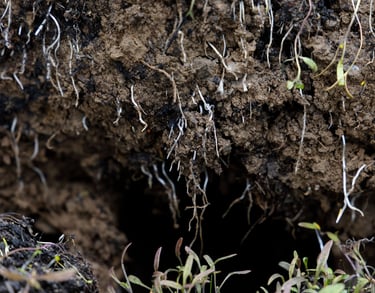
Soil is a web of relationships.
You're already a part of it.
Every decision feeds those connections or breaks them. The soil keeps that record and the plants show it last. We teach you to read it first.
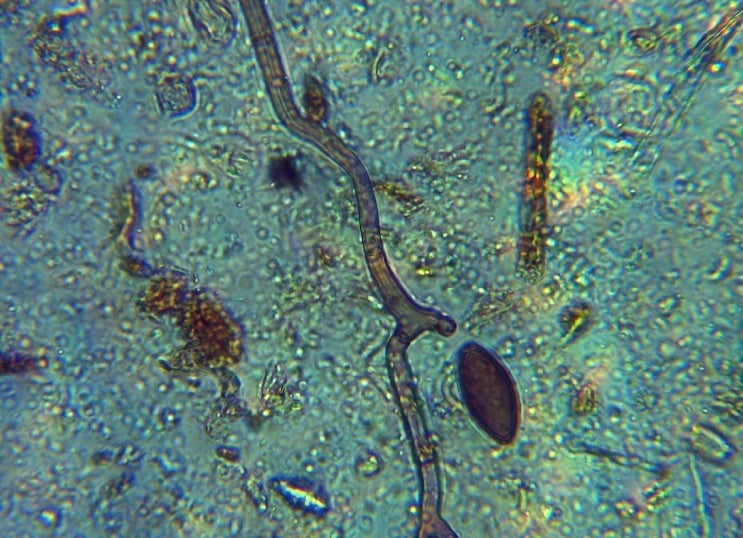
A functioning soil is a dense web of connections between mineral, water, air, roots and microbes, kept alive by the carbon plants feed into it.
Everyone who manages, designs or specifies land is part of that web. Every choice you make either feeds it or starves it. The trouble is, the soil keeps the receipts underground, hidden from view, until it's too late.
We show you where your soil stands, before the symptoms show above ground, and offer a roadmap of what to change first, so every decision builds on the last.
Beautiful soil rarely arrives by guesswork. It is measured, specified and managed.
Work Packages
Different work, same soil. Same latitude, same short window, same requirement — that what you do to your soil optimises for function or not. We help you navigate the gap.
Municipalities & Design:
Learn the Method:
Farms, Nurseries & Estates:
Your soil is answering. We help you read it.
→ The Site Function Assessment
→ The Roadmap & Stewardship
The soil you specify is the soil they inherit.
Build soil that works for you
Biology is not a supplement to fertility. In a functioning soil system, you and your biology are the engine of fertility.
59 Degrees helps you understand how to leverage your lands potential.


Why Latitude Matters
Follow the 59th parallel around the globe and it runs just south of
Stockholm, Oslo, Tallinn, Helsinki, then straight through southern Alaska.
Look east along the same line and you'll find Hudson Bay, Central Siberia, permafrost. Every reasonable expectation for 59 degrees north is subarctic.Scandinavia isn't, because the Gulf Stream refuses to let it be. Southern Alaska isn't, because the Alaska Current does the same job on the other side of the planet. Two oceans, two currents, one result — near-polar light on temperate soil, a combination that exists almost nowhere else on Earth.
That's the ground we've worked for 25 years.
25 years. One argument. Northern soil deserves its own soil science.
Our Partners














59degrees Soil Architects
Building biological function.
hej@59degrees.com
Org No. 559020 1488
© 2026. All rights reserved.