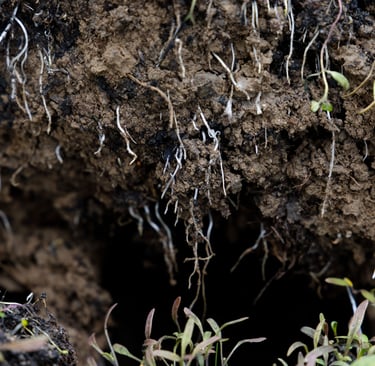
The Soil Function Ladder™ – a practical roadmap for farmers and advisors to grow regenerative soils.
We combine deep soil diagnostics, system design, and the Soil Function Ladder™ to pinpoint the true limiting functions in your soil – and what to do first in a real farm context.
The Soil Function Ladder™ Gets your Soil Working!
Farmers and advisors share the same core problem: high‑stakes soil decisions, made under pressure, with conflicting information and no clear way to see where the soil really stands or what to prioritise next.
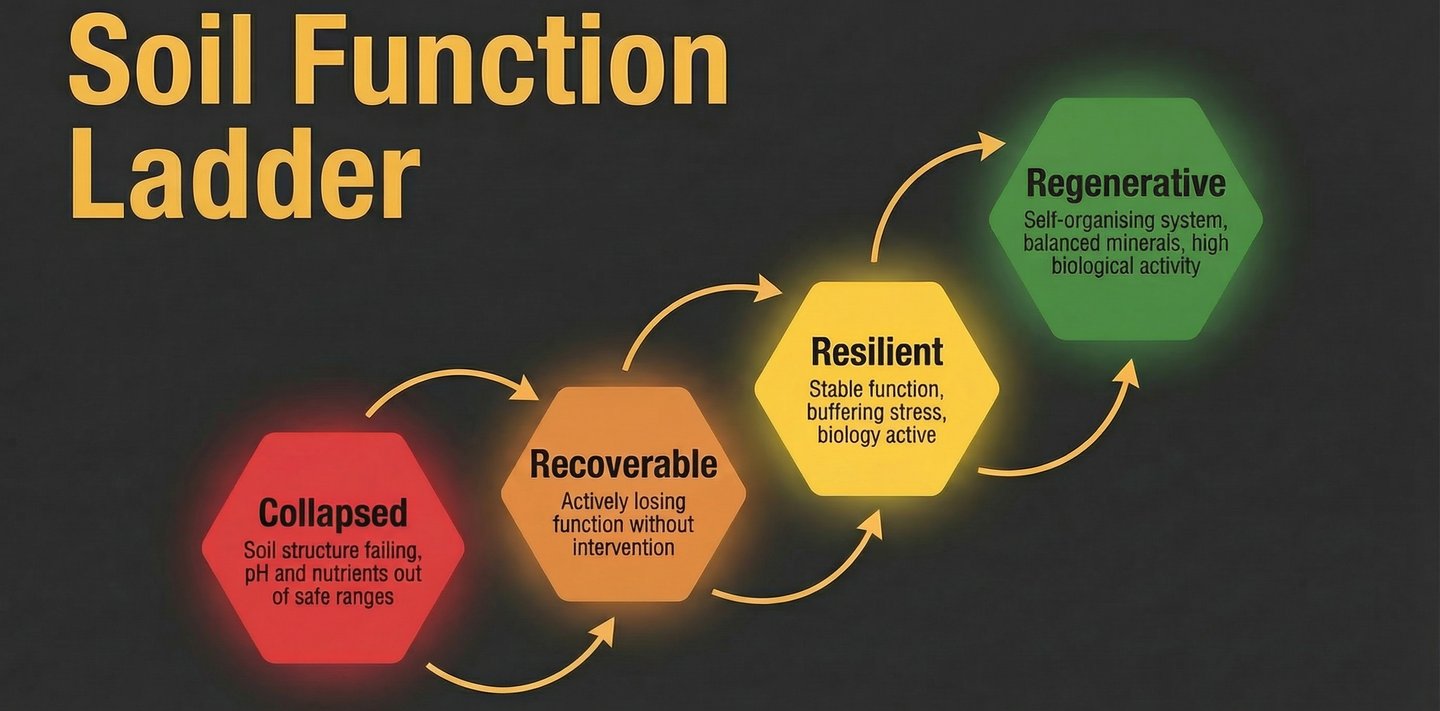
The Soil Function Ladder™ turns scattered tests, field symptoms, and soil indices into a simple four‑rung roadmap – Collapsed, Recoverable, Resilient, Regenerative – and replaces the vague “healthy/not healthy” binary with a concrete position and direction of travel.
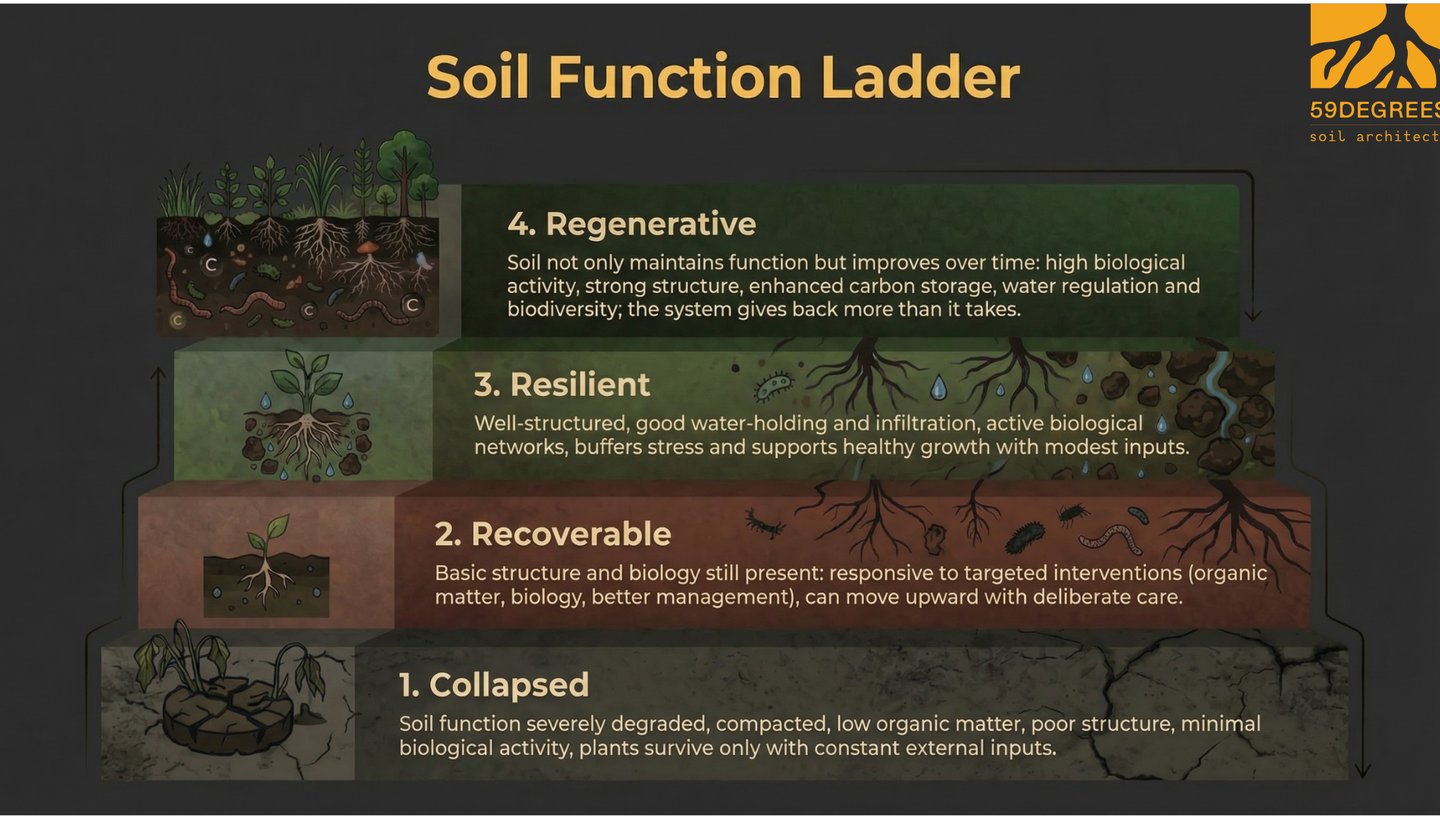
Our systems‑design method gives you an honest appraisal of the current rung, a realistic next step for each field, and a way to track genuine progress over time instead of guessing from one season’s yield.
Complex data are consolidated into science‑backed actions you can actually take, so profitability and soil health can move together, season after season. With our method, farm profit is prioritised through systemic changes at key leverage points in cropping design. If you want to know more, drop us a line!
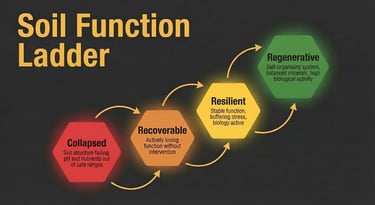
Why are you not Growing Soil?
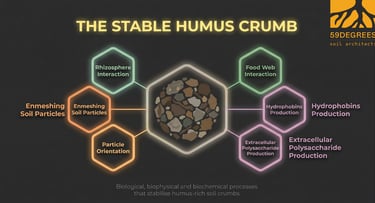
"Over a decade of working with farmers on collapsed soils has shown me they are often operating from the wrong script. A humus‑rich soil has to be grown together with the plant, carefully balanced with the soil’s mineralogy and strengthened through microbiology. Only then do we truly switch on the soil‑building process and start to see the beautiful formation of stable soil crumb. Most farmers are trying to apply “regenerative” techniques on top of collapsed soils, hoping to jump straight from Collapsed to Regenerative in one move – it is costly, and it does not work" Josef Winter founder 59degrees.
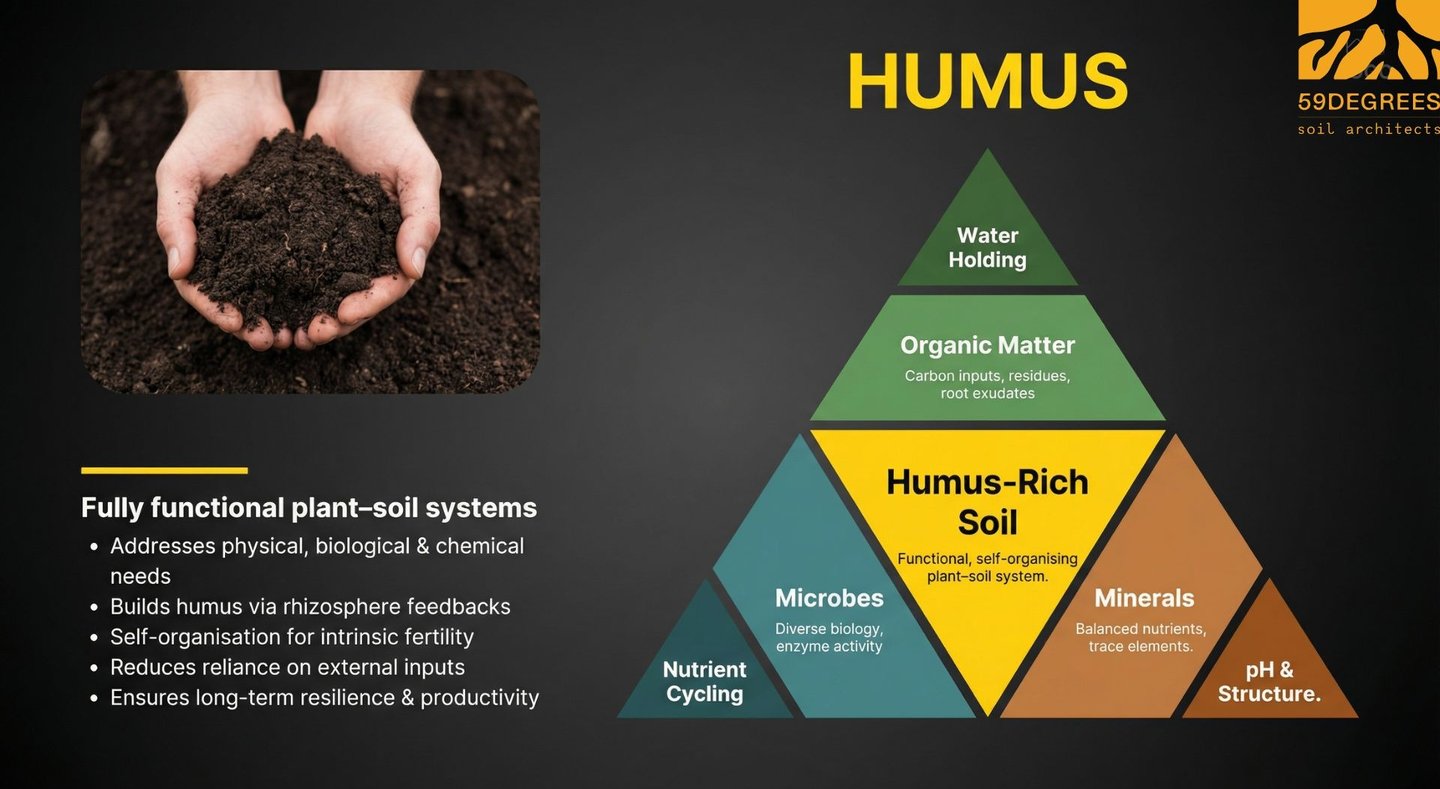
From soil confusion to a working plan that builds soil.
1. Listen & map the problem
You share your farming system, soils, and constraints – budgets, timelines, policies, and existing designs – so we understand the real context for change.
2. Assess soil structure, biology, and balance
We combine lab data, field observations, and your local knowledge into a single, readable picture of how the soil is functioning.
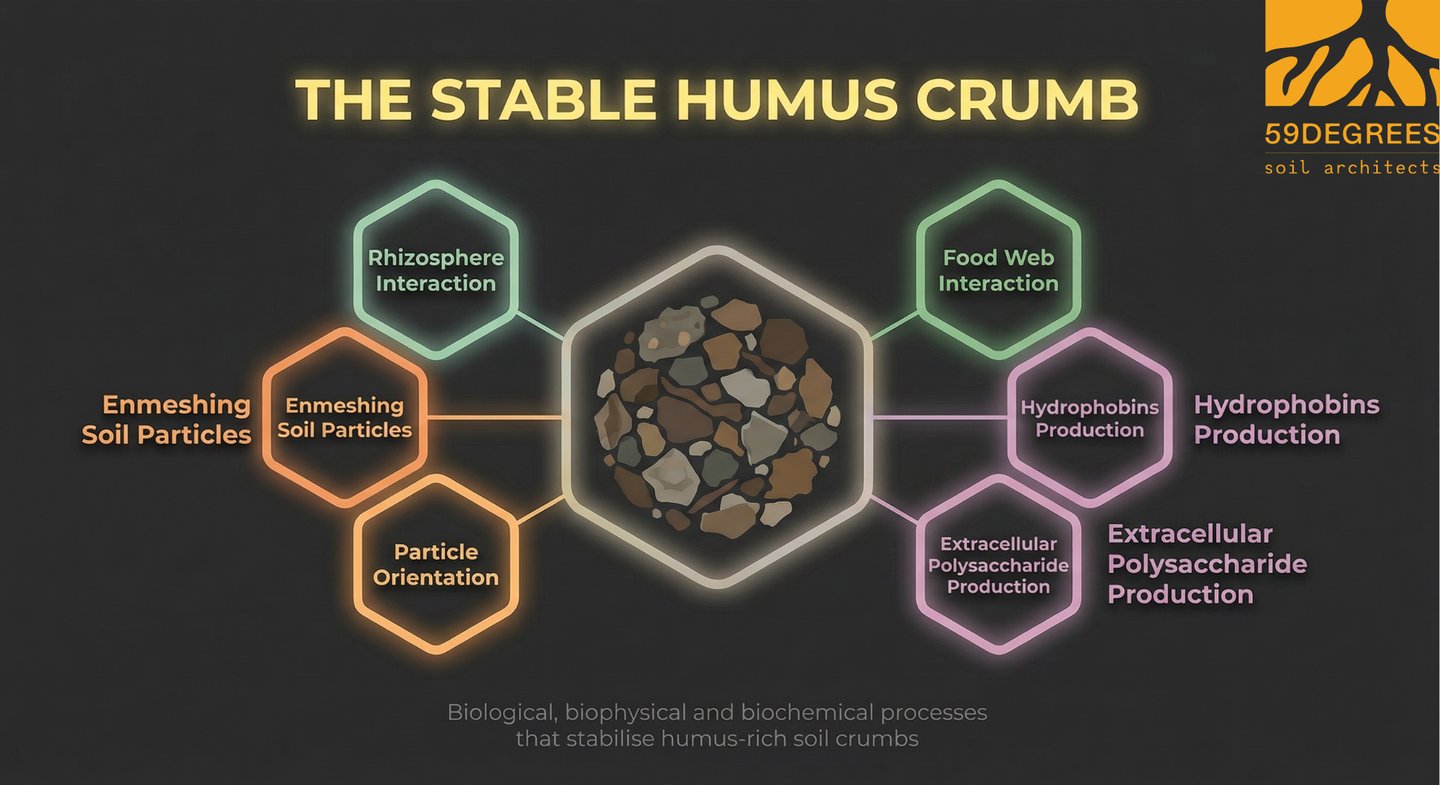
3. Design stepwise interventions
You receive a short, ranked list of actions that fit your rotation, equipment, and risk tolerance – what to do, when, where, and why.
4. Support implementation & learning
Ongoing advice, workshops, and resources help you adjust as conditions, markets, and seasons change, so each year moves
59degrees Soil Architects
Make your Soil your Strongest Asset- not your weakest link.
Contact
Subscribe
info@59degrees.com
© 2025. All rights reserved.